
Economics of Electrification
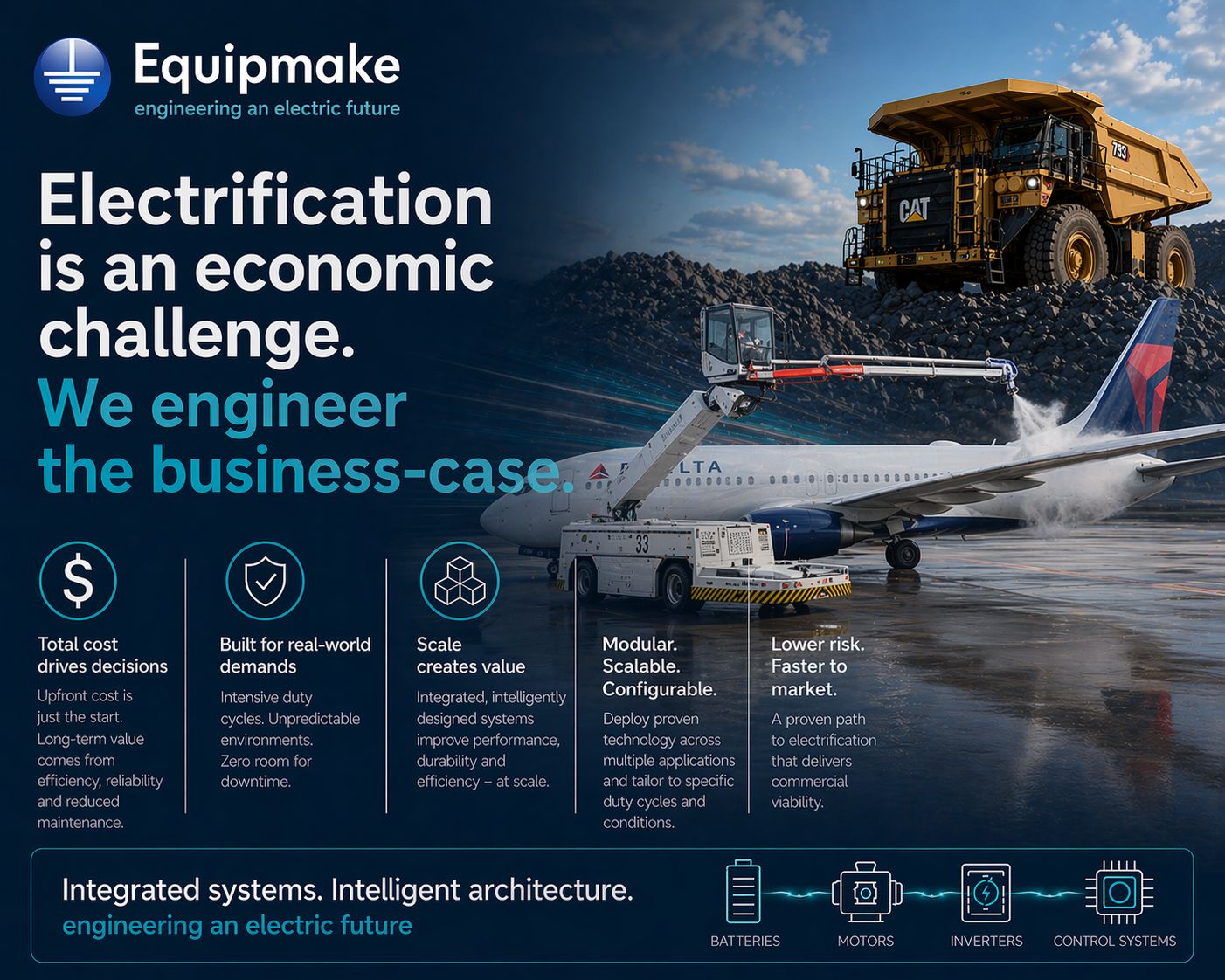
Electrifying heavy equipment is often viewed through a technical lens, but in reality the primary challenge is economic.
In off-highway and heavy-duty applications, the demands are different. Fundamentally duty cycles are intensive, environments are unpredictable and downtime is costly.
Electrification in these sectors requires suppliers to engineer systems that deliver consistent, reliable performance in real-world conditions, over the full lifecycle of the machine.
That’s where the economics are defined and the business-case built. Upfront cost is only one part of the equation, as long-term value is shaped by how efficiently a system operates, how often it requires maintenance and how reliably it performs under load.
When batteries, motors, inverters and control systems are integrated into a cohesive and intelligently designed architecture, performance, durability and efficiency improve together. This is where the importance of scale plays in to building the business-case.
As a result, bespoke, one-off engineering is moving down the priority list, with modular, scalable platforms taking precedence.
Configurable systems allow OEMs to deploy proven technology across multiple applications, while tailoring performance to specific duty cycles and operating conditions.
The outcome is faster development, lower risk and a more commercially viable pathway to electrification.
That’s where Equipmake is focused.
Share your feedback
Discover